

Blogs & News
What the Palisades and Eaton Fires Taught Me About How Homes Really Survive Wildfire
By Kelly Berkompas
I’ve spent years in wildfire protection, but nothing quite prepares you for standing in the aftermath of a truly catastrophic wildfire.
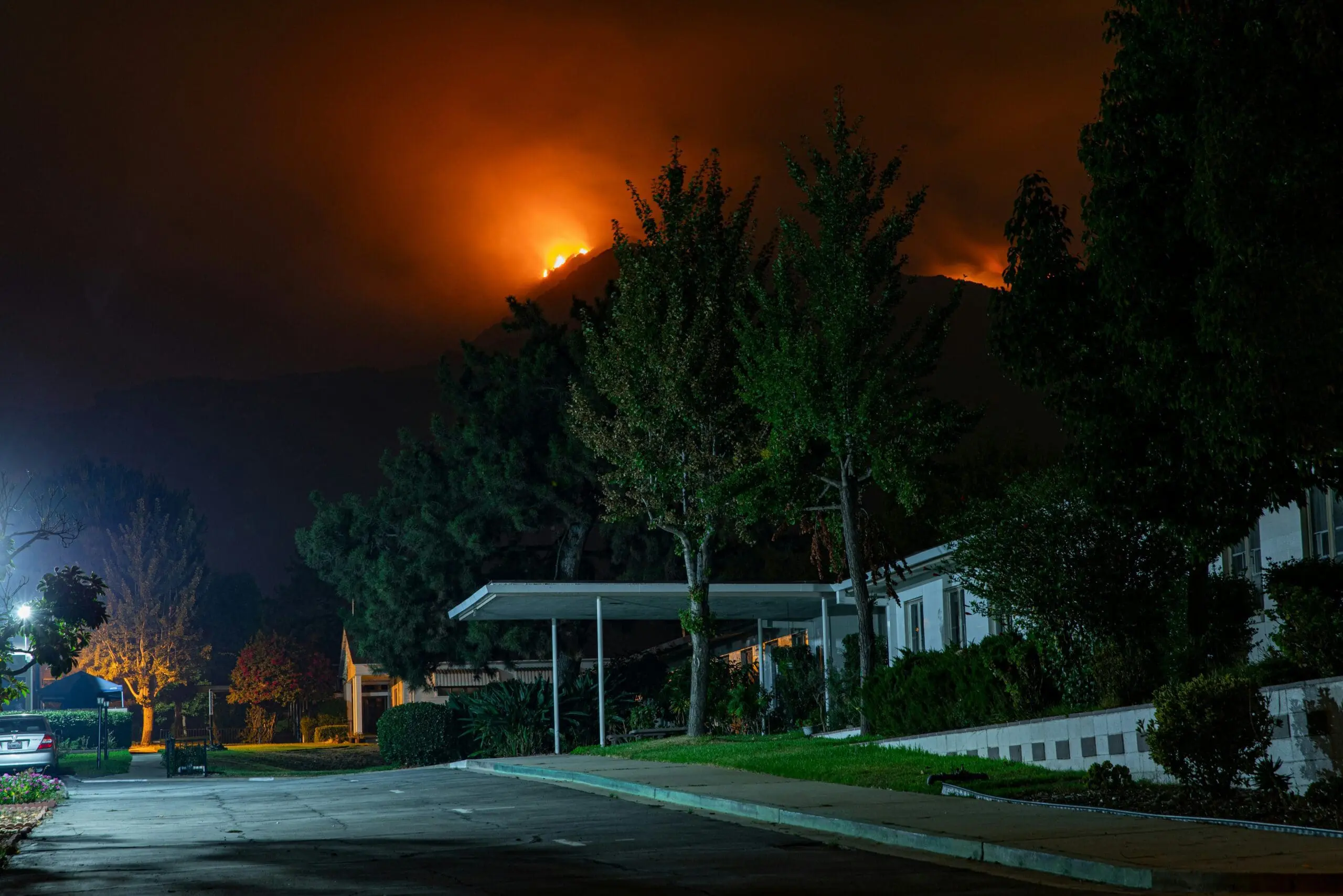
When the Palisades and Eaton Fires tore through Southern California in January 2025, it was unlike anything I had seen before. The fires were being driven by extreme Santa Ana winds, with some gusts reaching up to 90 miles per hour. I sat glued to the television watching in disbelief as the fire exploded in size within just hours, overwhelming communities and leaving devastation behind it.
By the time it was contained, the scale of destruction was staggering:
- 31 confirmed fatalities
- More than 16,200 structures destroyed
- Over 37,000 acres burned
- Entire neighborhoods reduced to ash
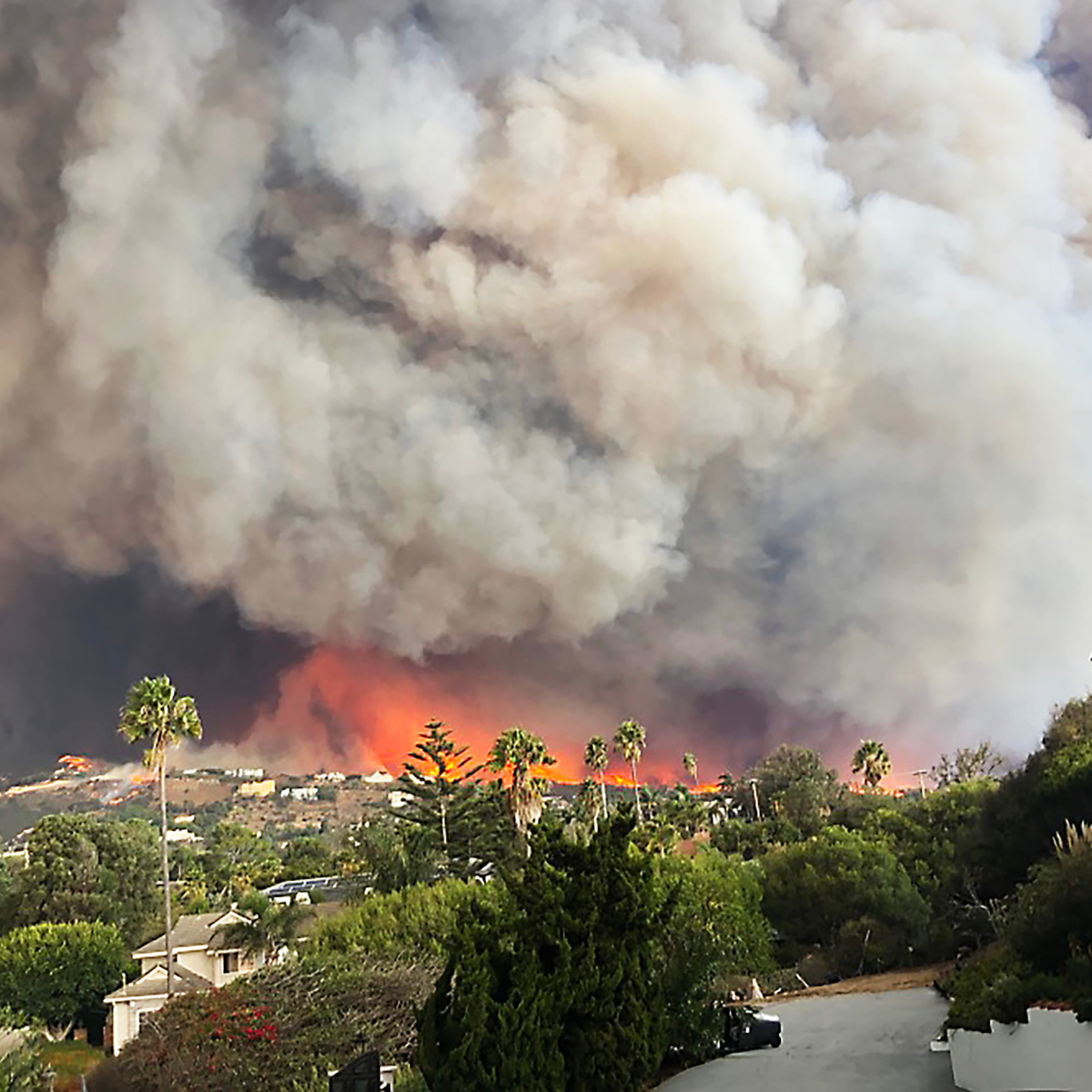
Walking through Malibu afterward, the most striking thing wasn’t just the destruction – it was the contrast.
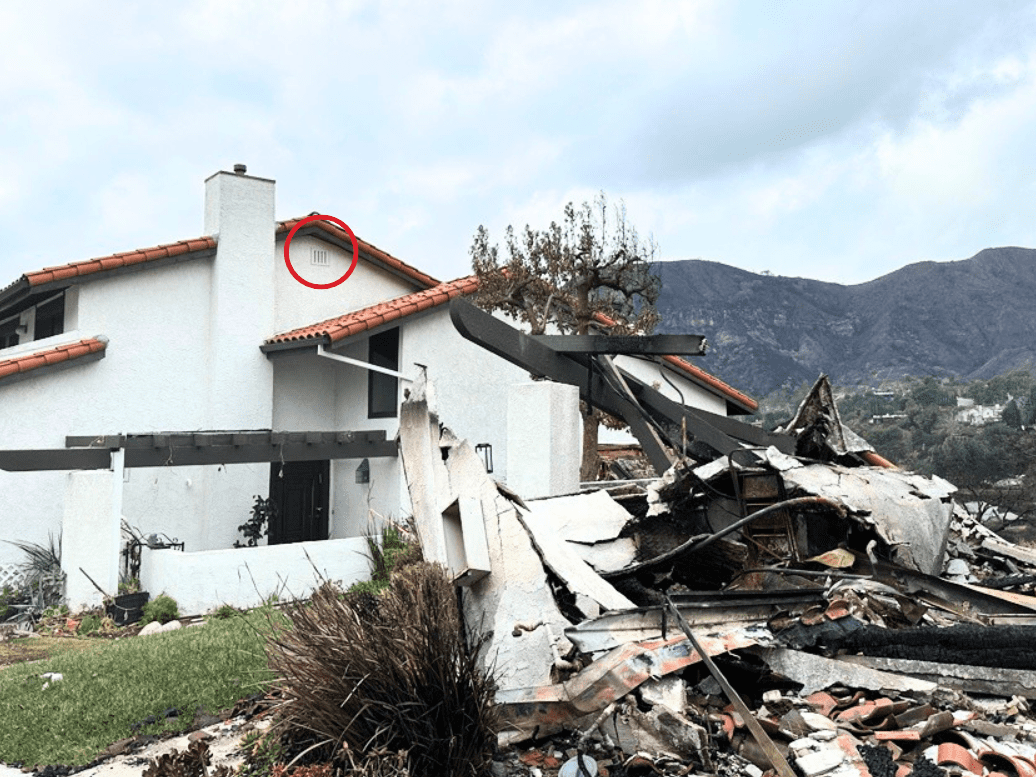
You would see one home completely gone, reduced to a concrete slab and twisted metal…and right next door, another still standing.
That contrast told a powerful story.
The Role of Embers: The Real Threat
What many people don’t realize is that most homes didn’t ignite from a direct wall of flames.
They ignited from embers.
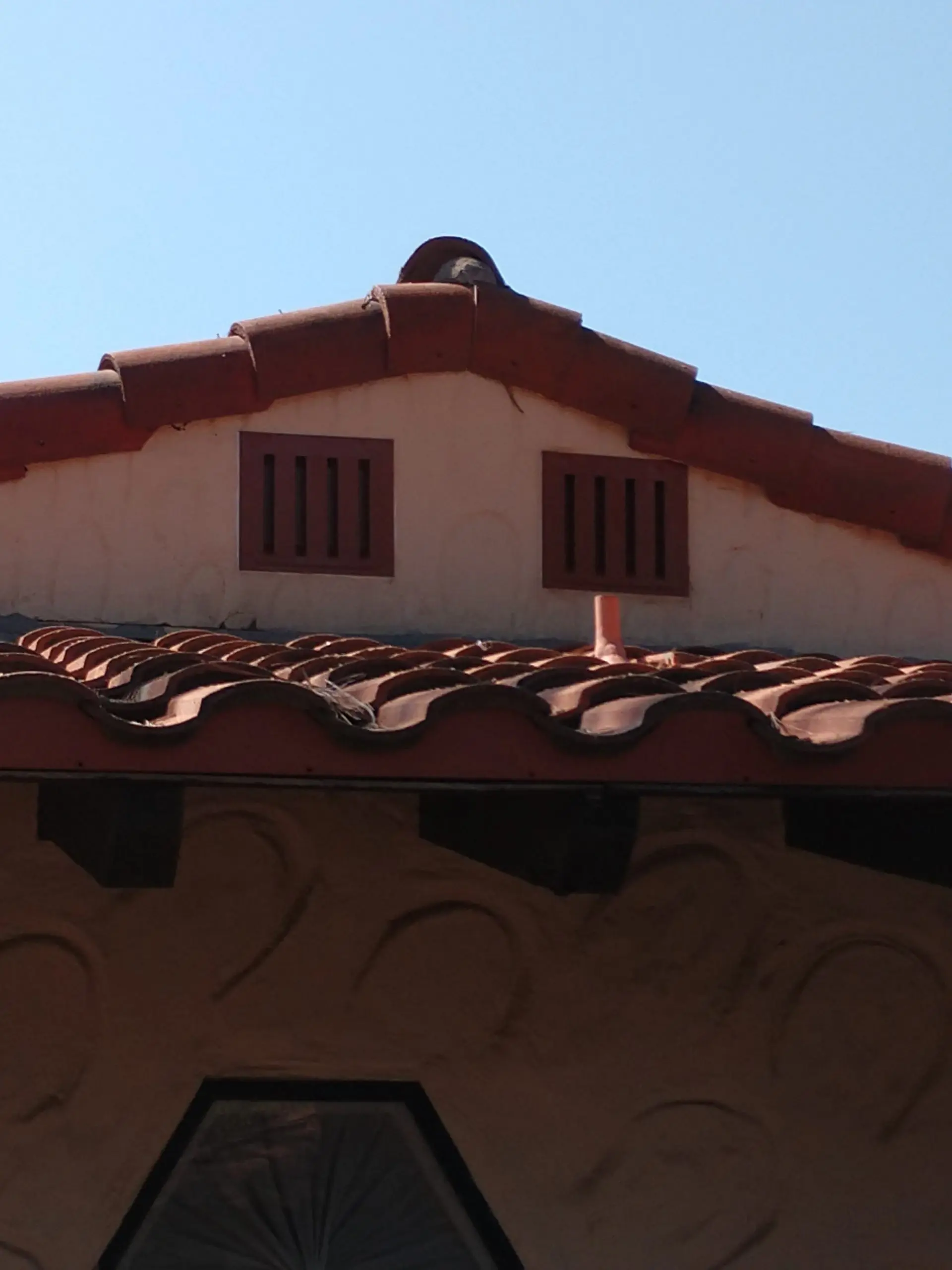
In high-wind conditions like the Palisades and Eaton Fires, embers are blown miles ahead of the fire front. We are not talking about a fire throwing a few sparks. It is often more like a blizzard of millions of embers. Like a snowstorm, they blow and fall everywhere at once – on roofs, decks, landscaping and most critically entering homes through vents and vulnerable openings.
That’s exactly what we saw in Southern California.
We have worked with multiple homeowners who lost their homes not because the fire physically reached them, but because embers or the fires they started found their way inside. Once inside, it only takes minutes for a house to be lost.
It’s a silent, almost invisible mechanism of destruction and it’s becoming more common as fires intensify.
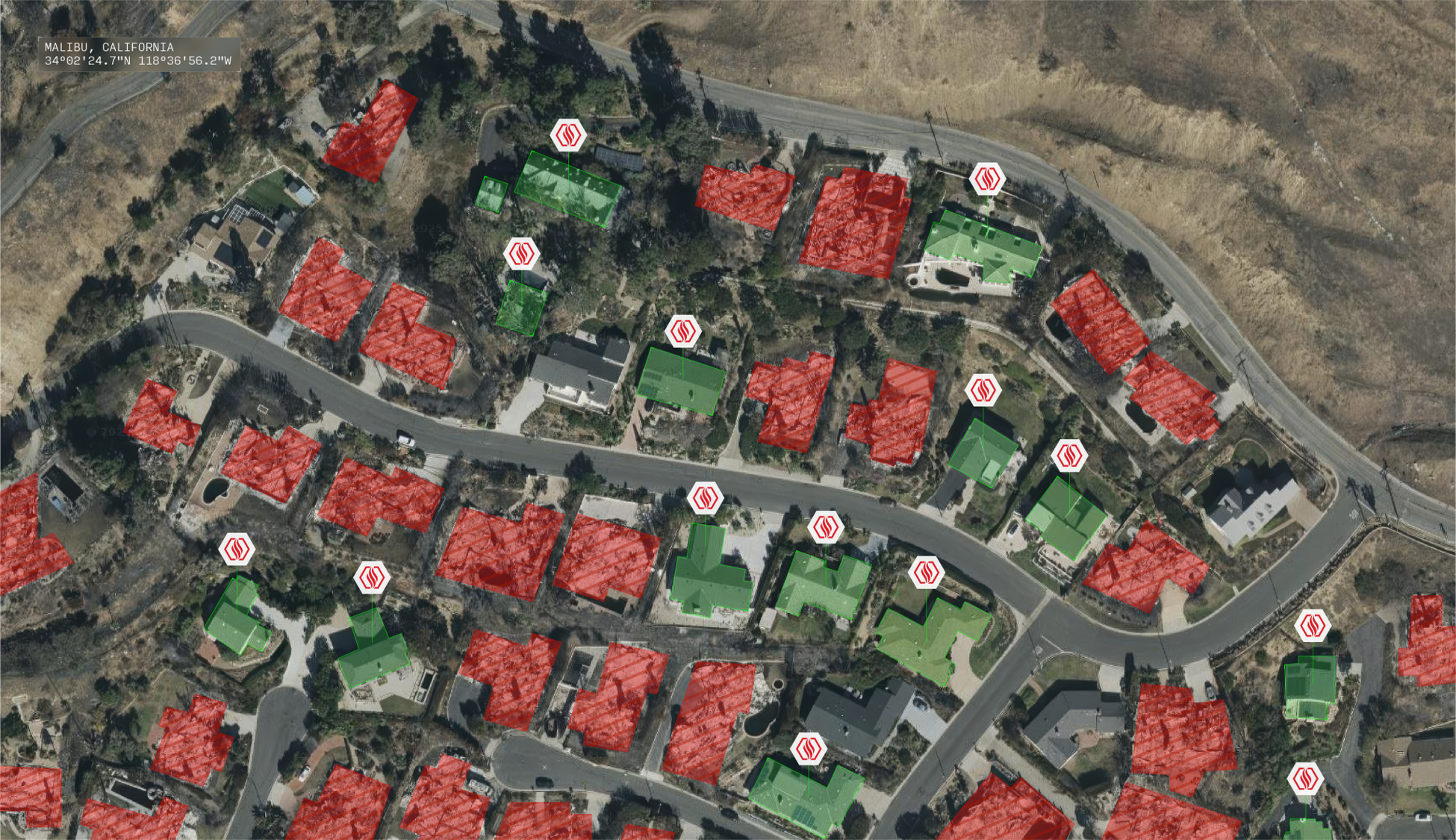
What We Saw First-hand in the burn areas
This is where the story changes.
In one particular neighborhood, among the devastation, there were 14 homes we had worked with – all equipped with our fire-resistant vent systems – that survived.
Fourteen.
They weren’t in isolated areas. They were in the same conditions as their neighbors, exposed to the same ember storms, the same wind, the same fire behavior.
And yet, they stood.
That moment was incredibly powerful for me. Because it reinforced something we’ve believed for a long time:
Wildfire survival isn’t random. It’s massively influenced by protection decisions.
Homes Are Not Burning Equally
These fires made one thing very clear:
Fires are no longer behaving in predictable ways.
They are:
- Moving faster
- Jumping further
- Reaching areas previously considered low-risk
- Destroying homes from the inside out
We are seeing a shift where the difference between losing a home and saving it can come down to very specific vulnerabilities – such as vents.
And in many cases, the difference between total loss and total survival is just a few feet.
One home unprotected. The one next to it hardened. Completely different outcomes.
A Turning Point in How We Think About Fire Protection
For me, the Palisades and Eaton Fires weren’t just another fire event. They were a turning point.
It proved that ember-resistant construction isn’t optional anymore, it’s essential.
Because when embers are the primary cause of ignition, traditional thinking about wildfire defense – clearing brush, reacting to flames – isn’t enough on its own.
We have to think about:
- How embers enter a structure
- Where the vulnerabilities are
- How to stop ignition before it starts
Why This Matters Now More Than Ever
Across California and beyond, we’re seeing more fires like this: wind-driven, ember-heavy, and devastating at scale.
Thousands of homes can be lost in a single event.
But these fires also showed something just as important:
Homes can survive, even in the middle of catastrophic fires, when they are properly protected.
Those 14 homes are proof of that.
And for me, that’s what continues to drive the work we do every day.
Because the difference between losing everything and coming home to it…can come down to the details you choose to protect.

Protection that pays for itself
I’m the first to acknowledge that very few homeowners wake up excited to spend money on upgrades like fire protection. These aren’t the kind of improvements you see every day or show off to friends. They’re the ones you hope you never truly need.
But after what I witnessed in here in Southern California, I see it very differently.
Because when you stand in a neighborhood where entire blocks have been reduced to ash, and a protected home is still standing… the conversation about cost changes completely.
Fire protection isn’t just another expense. It’s an investment in certainty; in peace of mind. It’s about knowing that you’ve done everything you can to give your home the best possible chance of surviving in a situation that is increasingly out of your control.
And the reality is simple.
When you compare the cost of ember-resistant protection to the cost of losing a home, the memories, the disruption, the financial impact, it isn’t even close.
It’s a small, one-time decision that can protect something irreplaceable.
That’s why I believe this is protection that truly pays for itself. Not just financially, but in the confidence it gives you when it matters most.
Related Posts
-

Independent third-party verification for both wildfire protection and one-hour fire-resistance-rated assemblies When specifying fire protection products, independent verification matters. It…
-
I’ve spent years in wildfire protection, but nothing quite prepares you for standing in the aftermath of a truly catastrophic…
-

When it comes to protecting homes from fire, most people don’t think about the technology behind the scenes. But that’s…
